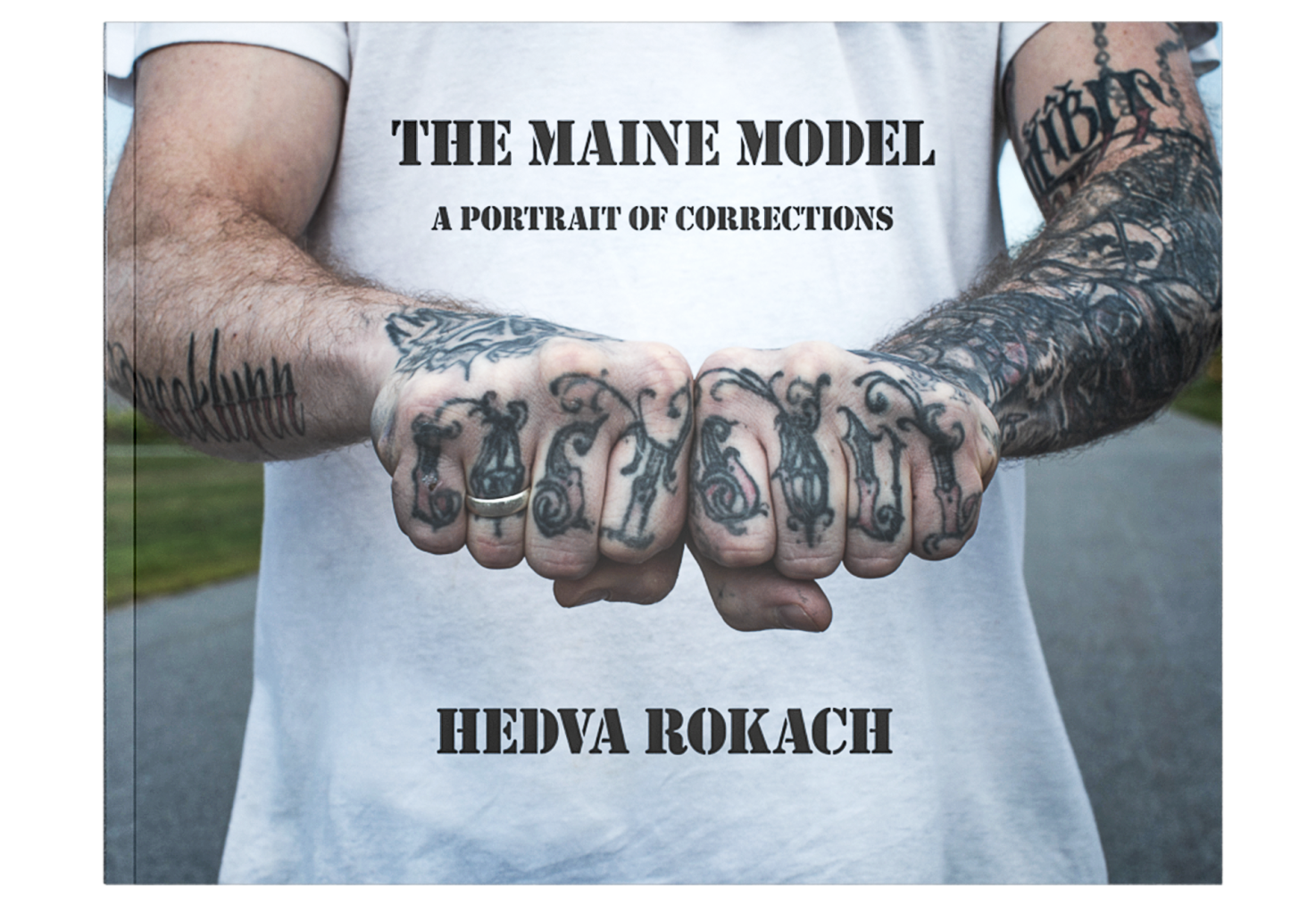
The Maine Model: A Portrait of Corrections
Hedva Rokach
מחיר קודם: $63
$44
Availability: Out of Stock
The Maine Model: A Portrait of Corrections is a photography book by Israeli photographer-artist Hedva Rokach. It presents photographs made inside Maine correctional facilities in the summer of 2026: people, places, objects, and everyday life. The photographs reflect Rokach’s experience of encountering the reality of the correctional system and portray incarcerated people as complex human beings without obscuring responsibility for the acts that led to their incarceration. In some photographs, figures were removed and replaced by white spaces; this artistic device developed in response to considerations involving victims’ families and the protection of privacy.
The project is an independent artistic work. It does not seek to evaluate Maine’s model of corrections, but instead invites viewers to consider it through the people and places Rokach encountered and to raise questions.
Hedva’s work brings attention to the people within the system, rather than presenting corrections only through policies, statistics, or institutional structures. Her work provides an independent lens on the people and environments in which these principles are experienced.
— Randall A. Liberty, Commissioner, Maine Department of Corrections
About the Book
The Maine Model: A Portrait of Corrections is a photography book by Hedva Rokach, created following her work inside four Maine correctional facilities in the summer of 2026. These facilities operate within the Maine Model of Corrections, which is based in part on principles developed in Norwegian correctional systems and differs from practices common in many correctional systems in the United States.
Rokach photographed incarcerated people and staff in the environments where they live and work. The photographs were made without staging, with close attention to natural light and to the lighting found in different spaces: cells, housing units, a library, prayer rooms, gardens, and other areas. The light in these spaces shapes the atmosphere of everyday existence for the people who live there and affects how they appear and are experienced. The photographs express the way Rokach experienced her encounters, leaving room for the viewer’s own observation and raising questions about confinement and freedom, punishment and rehabilitation, responsibility, and the possibility of returning to society.
One of the book’s most distinctive artistic devices is the removal of photographed people and the use of white silhouettes in their place. This stark device—the erasure or removal of people from the image—resulted from restrictions on publishing people’s faces. The absence is not separate from the reason for it: in many cases, it is connected to the acts that led people to incarceration, to victims of those offenses and their families, and to restrictions that resulted from those circumstances. The white spaces emphasize the connection between the acts and the resulting absence.
The Maine Department of Corrections provided access to its facilities and logistical assistance without intervening in the artistic work or the independent project. The collaboration with the system continues: the U.S. edition is printed at the Maine Correctional Center, and a portion of the proceeds supports the Resident Benefit Fund.
About the Artist
Hedva Rokach is an Israeli photographer-artist. Her work focuses on people, identity, belonging, community, and encounter. Her practice includes short- and long-term artistic and documentary projects, including Dolls, Wadi Ara, Japanese Sushi Girls, Tbilisi Dream, Faces & Facets of Jewish Life in Maine, and others. Her personal website presents her photography projects and art books. The Maine Model: A Portrait of Corrections, created following her work inside Maine’s correctional system, is her seventh book. Many of her projects have been developed with the support and collaboration of Itay Bahur Publishing, and all of her books have been published by the press.
Essays
“Why would anyone want to photograph prisoners’ cells?”
Hedva Rokach, 8
Tangled Truths Inside Maine’s Correctional Facilities
Paula Gerstenblatt, PhD, 12
Maine Model of Corrections
Randall A. Liberty, Commissioner, 14
Artworks, 16
Maine Correctional Center, 17
Women’s Center, 89
Southern Maine Women’s Reentry Center, 99
Maine State Prison, 115
Maine Department of Corrections – The Central Office, 163
Index of Names, 169
“Why would anyone want to photograph prisoners’ cells?” \ Hedva Rokach
“Why would anyone want to photograph a prisoner’s cell?”
That is what one of the residents asked me on my first day at the Maine Correctional Center in Windham. He was an older man, and his cell was in a unit where residents have fewer privileges. Why would anyone want to photograph the reality of incarcerated people and correctional officers, of people who have committed serious offenses, people whom society removes from the public for punishment and protection? I had no good answer. “You’re absolutely right,” I told him, and continued photographing.
This project took shape by chance. In late July 2026, Itay Bahur, our friend Professor Paula Gerstenblatt, and I went to have her art catalogue printed at the print shop inside the Maine Correctional Center. To enter the facility, we had to have our belongings searched and pass through a metal detector. The corridors were clean and orderly. Through the windows, we could see the sky and the bright summer light of Maine, alongside the barbed-wire fences surrounding the facility.
The people working in the print shop and other workshops were residents. Brian Pelletier, Correctional Industries Manager, gave us a tour. We toured the print shop, upholstery shop, sewing workshop, and other areas. The contrast between the quiet, orderly environment, the warm welcome we received, and the circumstances that had brought these people there sparked my interest.
I suggested to Brian we undertake a photography project at the facility. He passed the idea to Randall A. Liberty, Commissioner of the Maine Department of Corrections, and within a few days, the project was underway. Roy King, the DEI (Diversity, Equity, and Inclusion) Manager for the Maine Department of Corrections, was assigned to accompany us.
The opportunity to enter a world typically hidden from view, and the act of photographing itself, were both exhilarating and challenging. I photographed in natural sunlight along the prison walkways and expansive grounds, as well as in building interiors draped in artificial light, working within strict constraints of time and space. I observed staff and residents first and foremost as human beings, without forgetting the reasons they were there.
I did not know the histories of the people I photographed. I knew that the facilities in Windham and Warren are medium and maximum security facilities. I could only guess what some of the people I was permitted to photograph and publish had done, and the combination of circumstances and different facets of their personalities that led them to commit terrible acts, including murder, sexual assault, drug trafficking, and offenses against minors.
As I photographed, I also thought about the limited freedom that can exist within a place designed to deprive people of it. I, too, had clear boundaries: where I was allowed to go, whom I was allowed to photograph, how much time I had, and what I was allowed to see.
And yet, in front of the camera, a small space for choice sometimes emerged for the person being photographed: to agree or refuse, to look into the lens or look away, to stand naturally or alter their posture.
I did not direct the people I photographed or ask them to change their expressions. I do not claim to be objective; I interpret reality as I understand it and seek to convey my impressions of the person being photographed as faithfully as possible to the encounter between us. In this way, a space for the viewer’s interpretation emerges. The photograph does not necessarily tell us who the person before us is, what they have done, or what they have been through. It offers an encounter and leaves questions open.
One of the things I found difficult to confront, and still do, is the fact that the people looking back at the viewer from these photographs are human beings. Not monsters, nor symbols of evil, but complex individuals.
This complexity, as well as the relationships between the staff and the residents, taught me something about human nature and about the nature of a small community, separated and removed from the larger society.
I photographed people in their everyday routines: on their way to the dining hall, in the kitchen, playing cards, or watching television. For those outside the correctional system, it is difficult to imagine what life in a place like this looks like.
We drove to the Maine Department of Corrections in Warren for the first-ever Family Day in the history of Maine’s correctional system, initiated by Commissioner Liberty. Family members of residents were given permission to enter the housing units and cells, while correctional staff and residents prepared a barbecue for them in the prison yard. The facility’s Warden and the Commissioner sat down and ate with them. For a moment, it was possible to forget that this was a correctional facility.
While Itay, Roy, and I were eating with the others, the family of one of the residents passed by us. At their request, their son, a resident there, gave them a tour of the facility. “I’m glad you showed me this place,” his mother said. “I’m so relieved. It’s nothing like what I saw in my nightmares.” That moment stayed with me. It reminded me that this place, too, has a reality different from its public image, and that a face-to-face encounter with the reality inside can change something for those on the outside.
At the end of the project, representatives for victims’ families asked me not to publish photographs of certain residents. I chose to remove them from the photographs, leaving a white space in their place. In this way, the photographs contain images of people who were present yet absent: they had been there, but were no longer in the frame. The removal does not erase their existence or their responsibility for their actions. Instead, it creates another kind of presence and suggests that there are stories that cannot simply disappear. I used the same technique when I did not receive permission to photograph certain residents and staff members. In this way, the boundary between presence, absence, and responsibility became blurred.
It is difficult to convey the full complexity of life inside a facility through photographs. There is always something beyond the frame: a person’s full history, the circumstances that brought them there, the experience of victims and their families, and details I could not see. I tried to bring something of this world into the photographs, including people, places, details, interactions, and the routines of everyday life. I also wanted to look at Maine’s model of corrections and rehabilitation, led by Commissioner Liberty, which, as I understand it, seeks to combine punishment and public safety with rehabilitation, the acquisition of skills, and preparation for a return to society.
I did not set out to use the camera to judge whether this model succeeds or fails. I observed and experienced it through people and places, through the tensions between freedom and confinement, punishment and rehabilitation, presence and absence. Above all, through my photographs I wanted to invite the viewer to visit a place most of us do not see, and to meet people who are easily reduced to the acts they committed. I tried to see them as human beings without ignoring their responsibility, while leaving room for open questions.
I return to Israel after two months in Maine, bringing with me the photographs and the questions that arose during the project. In Israel today, where questions of responsibility, punishment, security, rehabilitation, and the place of the individual in society have become increasingly urgent, I find value in looking at the ways another society addresses crime, stigma, and the possibility of reintegrating people into society. I do not know whether a correctional model can be transplanted from one culture to another, nor whether it can address a complex social reality. Yet I believe there is value in the simple act of looking, comparing, and examining.
Attempting to balance accountability with humanity, while also protecting society and preserving the possibility of rehabilitation, is not merely a question of correctional policy; it raises broader cultural questions: What kind of space do we choose to create for someone who has committed serious harm, and what kind of society do we want to be? These are among the questions I bring back with me to Israel, and leave for the reader to consider. Can we protect society, acknowledge harm and responsibility, and still insist on seeing the human being behind the act?
Acknowledgments
To the staff at the Warren and Windham facilities, and to the residents of the facilities, thank you for your willingness to be photographed, for your openness, and for your desire to take part in this project.
To Professor Paula Gerstenblatt, friend and painter, whose connection with Brian Pelletier, Correctional Industries Manager, helped bring this project to life. Thank you for your love, encouragement, and trust in me.
To Brian Pelletier, for all your help, support, and encouragement. Thank you, my friend, for your positive spirit, your willingness to listen, and the generosity and kindness you offered throughout this journey.
To Roy King, DEI (Diversity, Equity, and Inclusion) Manager for the Maine Department of Corrections, a trusted guide who accompanied me throughout the project and during my time in the facilities. Thank you, my friend, for your quiet support and encouragement, for looking out for me, for accompanying me during the shoots, and, above all, for making it easier for me to connect with the staff and the people I met there.
To Randall A. Liberty, Randy, Commissioner of the Maine Department of Corrections, and an extraordinary person – thank you for the trust you placed in me and for giving me the “keys to the castle.” Without your trust, I could not have carried out this project or offered a glimpse into a world that is often far from sight and, perhaps, far from mind.
To Maya Hed, photographer and friend, for her ongoing encouragement and her discerning eye, especially in proofreading and polishing the English texts. Thank you for your love and care, and for your continued support and companionship.
To Eran Finzi, for the additional perspective, care, and support. Thank you for being part of this journey.
To Rafi Dudek, for his generous guidance, his thoughtful advice, and for the extraordinary patience and generosity with which he shared his knowledge and experience.
To Itay Bahur, my friend and partner in our adventures and journeys across the great seas, thank you for everything. I’m already looking forward to the next adventure!
Tangled Truths Inside Maine’s Correctional Facilities \ Paula Gerstenblatt
Hedva Rokach’s photographic artistry captures humanity, nuance, and what resides deeply in the souls of people and places. In her most recent series, she turns her lens toward a complex institution – one that, in theory, is intended to both punish and rehabilitate a stigmatized population. Hedva approaches her work with curiosity, wonder, and compassion. She ventures into foreign, unfamiliar, and, some might say, dangerous spaces; her determination to look beyond “single stories” without trepidation is a hallmark of her work, and a central reason her photographs move viewers so deeply.
The mention of the American prison system evokes intense emotions, opinions, and responses. As a social science researcher and Professor of Social Work at the University of Southern Maine, I am familiar with the history, data, feeder systems, racial disparities, and consequences of incarceration for residents, their families, victims, and the wider community. As the mother of a Black son and daughter, the criminal justice system also conjures personal fear and a fierce urge to protect, driven by statistics on sentencing and outcomes. I am also aware of the varying conditions and offerings across different prisons – due to a number of factors that, though worthy of mention, are not the focus of this essay.
Before moving to Maine in 2013, my only experience inside a prison was at a maximum-security women’s facility in California, where I accompanied a young friend to visit his mother. I felt as though I had entered another world, one in stark contrast to my own life. I left feeling overwhelmed, sad, and depressed – a reaction that solidified my decision not to work within this system or with this population.
Several years later, however, I was invited to the Maine State Prison (MSP) for a film screening and discussion with residents who belonged to the MSP NAACP Chapter. As we walked to the meeting room, residents and staff bantered back and forth in the corridors, often joking as they greeted one another. The atmosphere was a dramatic contrast to my experience in California. The filmmaker joined us, and as we sat in a circle, I was moved by the stories, insights, and humanity of the participants. After the discussion, I sat with a young Black man close in age to my own son, who shared his story with me: one bad decision with severe consequences for him, his family, and those he harmed. Wrapped within that choice was a luminous web of circumstance. We can settle for the surface narrative, or we can delve deeper to see and feel the corners of our own and others’ complicated existence.
In this body of work, Hedva Rokach leads us into these intricate terrains through portraiture, interior and exterior landscapes, and symbolic objects. She also employs a powerful technique: capturing an “absent presence” through white silhouettes of residents whose images might otherwise cause duress to their victims or their families.
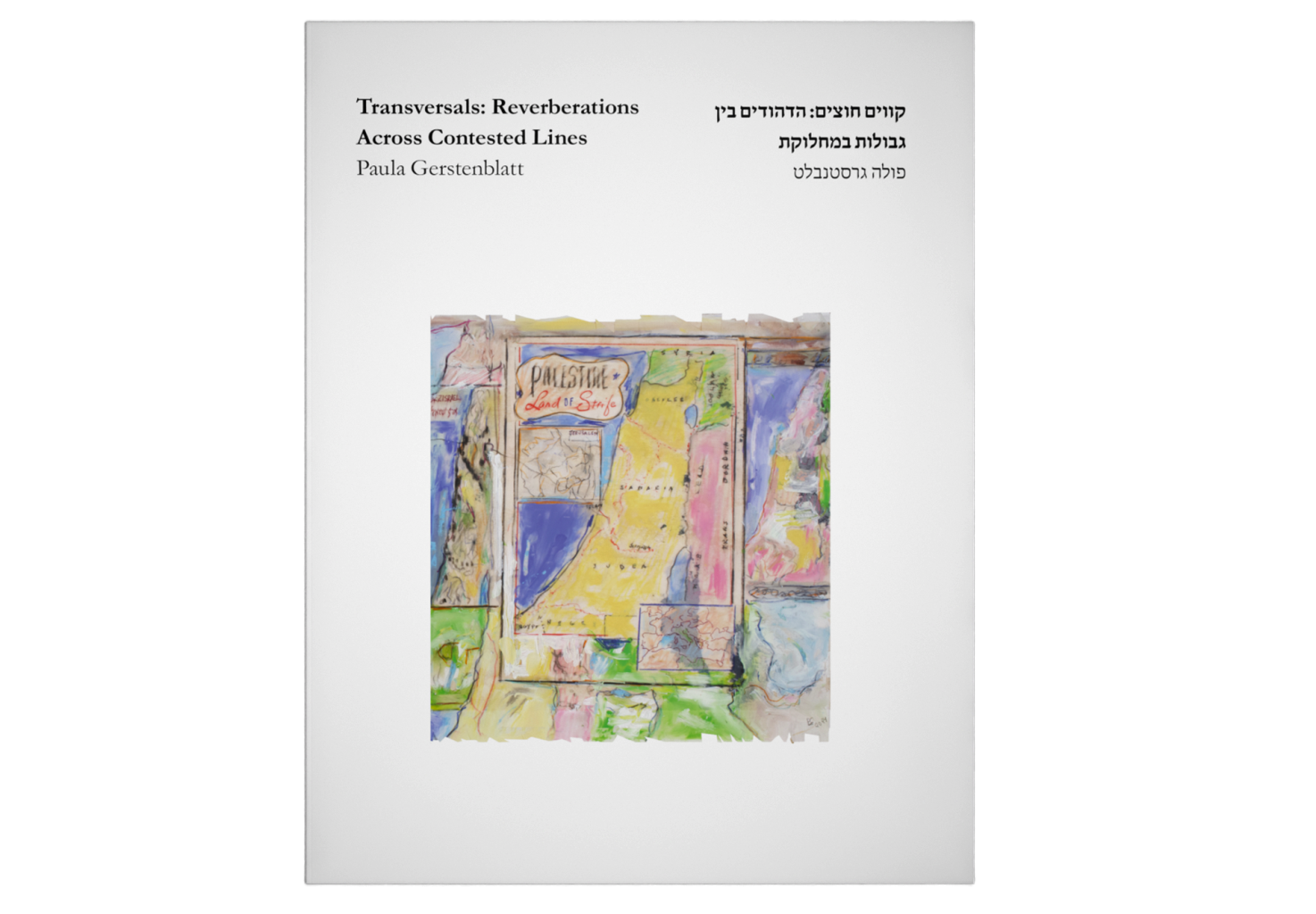
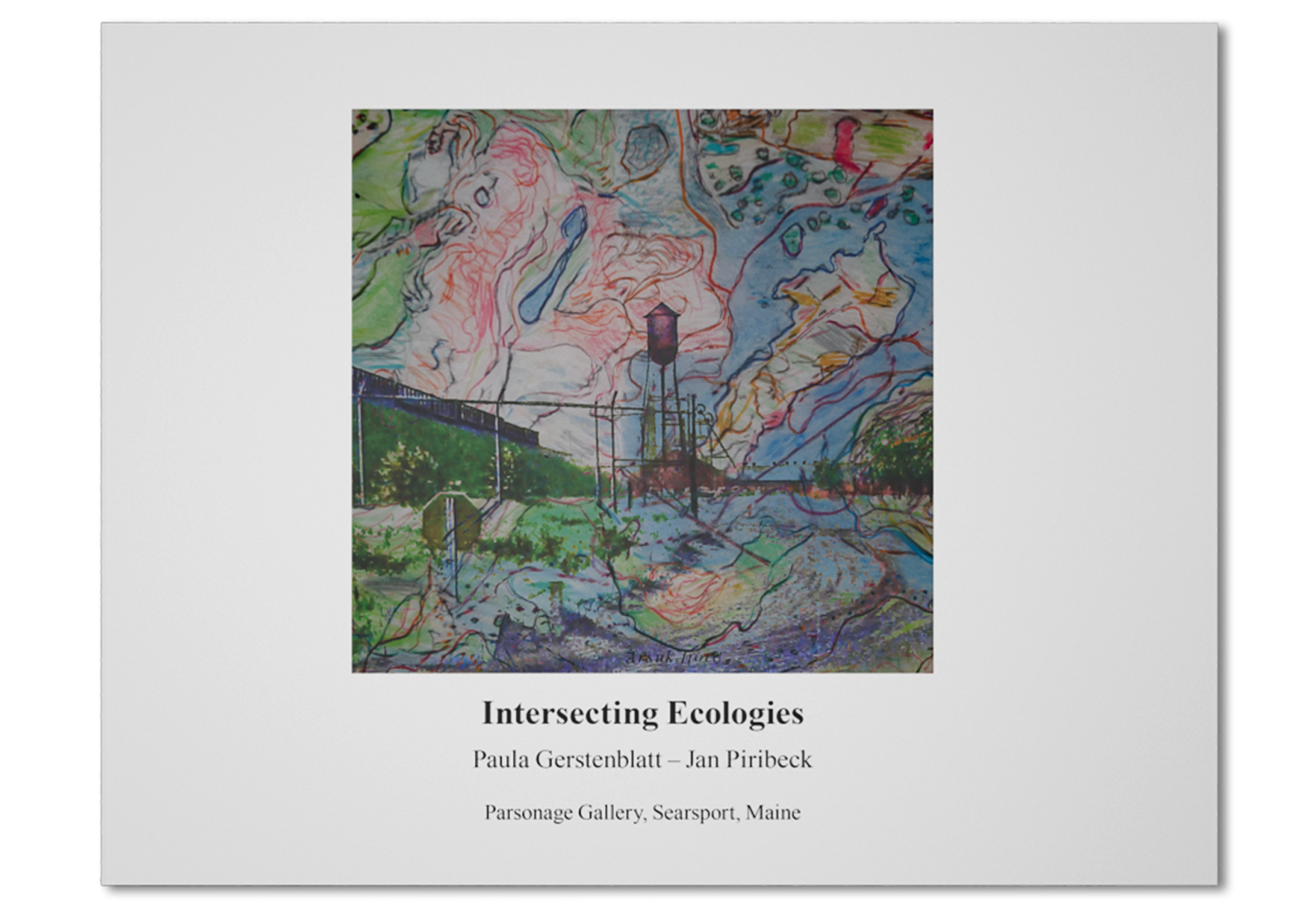
My relationship with the Maine Correctional Center (MCC) began when I requested a tour for a visiting colleague and her student from the University of Greenland. We were impressed by the atmosphere, the services, the relationships between staff and residents, and, in particular, the Industries Program led by Brian J. Pelletier. That initial visit led to the print shop producing large fabric panels for my exhibition with Jan Piribeck, Intersecting Ecologies, at the Parsonage Gallery. Later, when I needed a catalog printed for my series of paintings, Transversals: Reverberations Across Contested Lines, I thought of Brian and the Industries Program.
Hedva and her partner, Itay Bahur, an author and the publisher of Itay Bahur Publishing in Israel, designed and laid out the Transversals catalog, which led to the connection with Brian and the Industries Program at MCC. When Hedva and Itay traveled to the U.S. in June 2026 for the opening of Hedva’s exhibition, There Is Always an &, commissioned by the Maine Jewish Museum and presented at both the Maine Jewish Museum and the Holocaust and Human Rights Center of Maine, as well as for the launch of her artist’s book, Faces and Facets of Jewish Life in Maine, I suggested that we visit MCC to meet Brian in person and review a test proof of my catalog.
During that visit, the idea for this photographic project was born. As we walked through the facility, Hedva expressed a desire to pursue a photography project at MCC. Brian enthusiastically offered to reach out to Commissioner Randall Liberty to explore the possibility. Two days later, on a Zoom call, the project was officially launched, and plans were rapidly set in motion for Hedva to visit MCC, MSP, and the Commissioner’s office in Augusta.
After long days of photographing, speaking with residents and staff, and walking the grounds, Hedva produced a series that offers a layered, honest, and deeply human view of the people who live, work, lead, and administer these facilities.
Another thought crossed my mind as I looked through these photographs: Hedva’s unique positionality as an Israeli in the United States. We are living at a moment when being Israeli carries stigma and assumption, both here and across the globe – as if one’s citizenship or residence defines their entire being, without consideration of who they are, what they believe, or how they make good of themselves and their community. That Hedva was invited into the vulnerable spaces of people who are themselves deeply stigmatized, and often flattened into a single negative narrative, struck me as a fascinating juxtaposition. It intrigued me to see the lens she offered as an outsider, free of the filter of an American photographer.
The photographs in this book speak for themselves, and to the quiet, powerful artistry with which Hedva Rokach elucidates the tangled and complicated humanity of the people who reside and work within these walls – and, ultimately, of all of us making our way in this world.
Maine Model of Corrections \ Randall A. Liberty
The Maine Department of Corrections believes that the key to our success is possible through an environment of dignity, respect and hope. A non-adversarial approach provides the best opportunity for redemption and preparation for the future. Our team works in collaboration with those in our care to identify what brought them to our custody and to address each of those challenges.
We acknowledge that the primary factors that lead to incarceration are addiction, behavioral health, learning disabilities, poverty, trauma and neglect. When each of these issues are addressed in a collaborative way, everyone in the community wins. Reentry begins the day that a person is incarcerated. Planning for treatment, programming, education, housing and workforce development is foundational to our success.
We make our communities stronger by reducing harm through supportive intervention, empowering change and restoring lives. Maine’s efforts are outcome focused, striving to release people that are healthier, pro-social, and prepared for future success. Innovations such as internet access, enhanced nutrition, extensive college access, remote work paying fair market wages and wilderness excursions have created a safe, therapeutic environment.
We recognize that a correctional system must also honor the experiences, rights and voices of those who have been harmed by crime. The Maine Department of Corrections’ Victim Services team represents the perspective and rights of survivors, ensuring that they are informed of their rights and opportunities and are given a voice in the criminal justice system. In Maine, victim advocacy services begin during the prosecution of a case through the District Attorney’s or Attorney General’s Offices. When an individual is sentenced to the Maine Department of Corrections, our Victim Services team continues to assist survivors throughout the period of incarceration.
Victim Services provides information about a resident’s status, sentence and anticipated release date. For those who wish to address the harm they have experienced, victim-centered restorative justice resources are also available. We believe that healing begins when survivors are included, heard, supported and informed.
We believe that access to nutritious food is a human right. Maine has certified its residents as master gardeners, beekeepers and composters. We serve organically grown produce employing regenerative gardening practices, replenishing the soil. Scratch cooking methods, including in-house baking, provide our residents with the highest quality food. The reduction of sodium, carbohydrates and highly processed food, improves health, relieves medical conditions and lessens the expense of health care.
Maine’s approach provides simultaneous opportunity for incarcerated Mainers and our staff. A complete revision of the Basic Corrections Training Program has modernized our curriculum and provides the latest best practices in adult learning theory. The 21st Century Leadership Program provides professional growth for our Officers and prepares them for career advancement. Staff wellness is foundational to our success. Peer support specialists, therapy dogs, restorative justice practitioners and remote training sites are all efforts to best support our employees.
The Maine Model of Corrections has proven that creating a correctional environment that is non-adversarial, redemptive, and provides hope, creates safer communities and stronger families.
I would like to acknowledge my deep appreciation for the inspirational work of Hedva Rokach and Itay Bahur. Their masterful artistry truly inspires and will tell the story of correctional professionals and residents in their care, continuously striving to explore what is possible. I would like to acknowledge the team of Manager Brian J. Pelletier who proposed this collaboration and Manager Roy King for facilitating this compelling project. And as always, I’d like to thank each resident and staff member who volunteered to assist, making this important project a reality.
Randall A. Liberty
Commissioner
Maine Department of Corrections
Index of Names
Abbas, Ali 70-71
Adams, Jon 50
Anderson, Lee 70-76
Arbour, Franklin 120
Bahur, Itay 8-9, 11, 13, 15, 86
Bailey, Oliver 42
Barrows, Kelene 166
Bates, Shahnaz 160
Bates, Trevor 160
Beal, Benjamin 86-87
Birmingham, Chester 146-147
Boyd, Hunter 57
Brayden Laliberte 40
Bridges, Kevin 52-53, 56
Bruns, William 136
Bubier, Janice 98-111
Cameron, Ryan 42
Camire, Roland 27
Cantillo, Anthony 165
Clark, Monica 110
Cleveland, Shyniece 103
Coleman, Elijah 74-75
Collins, Steffan 48
Colter, Trevell 48
Cote, Jennifer 105
Cowan, Brian III 45
Curtis, Chadwick 166
Dall, Justin 74-75
DeAngelo, Bernard 97
Dow, Samanth 79
Duperre, Denis 161
Eastwood, Belinda 29, 32
Fava, Corey 23
Fitzgerald, Kyle 102
Ford, Laurie 110
Ford, Nicole 110
Frost, Sadie 36
George, Darlene 92
Gerstenblatt, Paula 8, 10, 12
Hafford, Abagayle 107
Hollis, Christiane 112
Idris, Kulmiye 58
Jones, Alyssa 98-111
Jordan Sirois 82
Keashaun Moody, Resident 54-55
Keaton, Joseph 78
King,Roy 8-10, 15, 66, 79, 86
Labbe, Joseph Jr. 24
Landry, Brady 70-76
Landry, Scott R. 167
LaPlante, Jeanine 106
Lemay, Eric 16
Lemery, Sarah 109
LeTourneau, Deborah 96
Liberty, Randall A. 88-11, 13-15, 164
Littlefield, Shanika 112
Longtin, Paul 30
Majok, Gang 123
Major, Bonnie 104
McKenzie, Richard 40
Mosher, Tessa 167
Noddin, Bruce 165
Norko, Aimee 166
O’Brien, Jill 165
Peart, Noel 133
Pelletier,Brian J. 8, 10, 13, 15, 86-87
Piribeck, Jan 13
Placides, Donn Amie 145
Porter, Ray 124
Quirion, Angelena 34
Reed, Kenneth 23
Richards, Tabitha 109
Rivers, Paul Jr. 40
Robinson, Kevin 121
Rolfe, Shane 78
Roux, Robert 63, 69
Schooley, Chuck 31
Segler, William 97
Segler, William II 68-69
Shaw, Todd 44
Shupe, Sam 85
Simpson, David 124
Smith, Allan 59
Smith, Christopher 126-127
Smith, Sherry 108
St. Thomas, Windi 111
Stanley, Shannon 113
Swett, Steven 74-75
Thayer, Nathan 125, 160
Thibeault, Christine 165
Thompson, Michael 40
Travis Jorgensen, Resident 82-82
Turecky, Filip 136
Wescott, Brittany 102
Whitney, Roberta 166
Wood, Dale 122
Wright, Marissa 70-71
Frequently Asked Questions
What is The Maine Model: A Portrait of Corrections?
The Maine Model: A Portrait of Corrections is a fine-art photography book by Hedva Rokach that presents people, places, and everyday life inside Maine correctional facilities while observing the state’s model of corrections.
Where were the photographs taken?
The photographs were made primarily at four facilities in Windham and Warren: Maine Correctional Center, Women’s Center, Southern Maine Women’s Reentry Center, and Maine State Prison.
What is distinctive about the photographs?
Rokach does not stage the people she photographs. She photographs them in their environments and everyday routines, portraying them as complex human beings without obscuring responsibility for the acts that led to their incarceration. Some figures were removed from the photographs and replaced by white spaces, making absence part of the image.
Does the book take a position on Maine’s model of corrections?
The book does not seek to evaluate the model. It observes it through people, places, and encounters, leaving readers to consider questions concerning confinement, responsibility, public safety, rehabilitation, and return to society.
Is the book artistic or documentary?
The book brings together fine-art and documentary photography. Rokach documents people, places, and everyday life as she encountered them, while the photographs also express her personal perspective and the way she experienced the reality of the correctional facilities.
In what languages has the book been published?
The book has been published in two editions: Hebrew and English.
Key Topics
Maine’s correctional system
Peop and everyday life inside correctional facilities
Documentary and fine-art photography
Confinement and freedom; punishment and rehabilitation
Responsibility, public safety, and return to society
Relationships between incarcerated people and staff
Stigma, families, and victims of crime
Presence and absence—the white space and what remains outside the frame