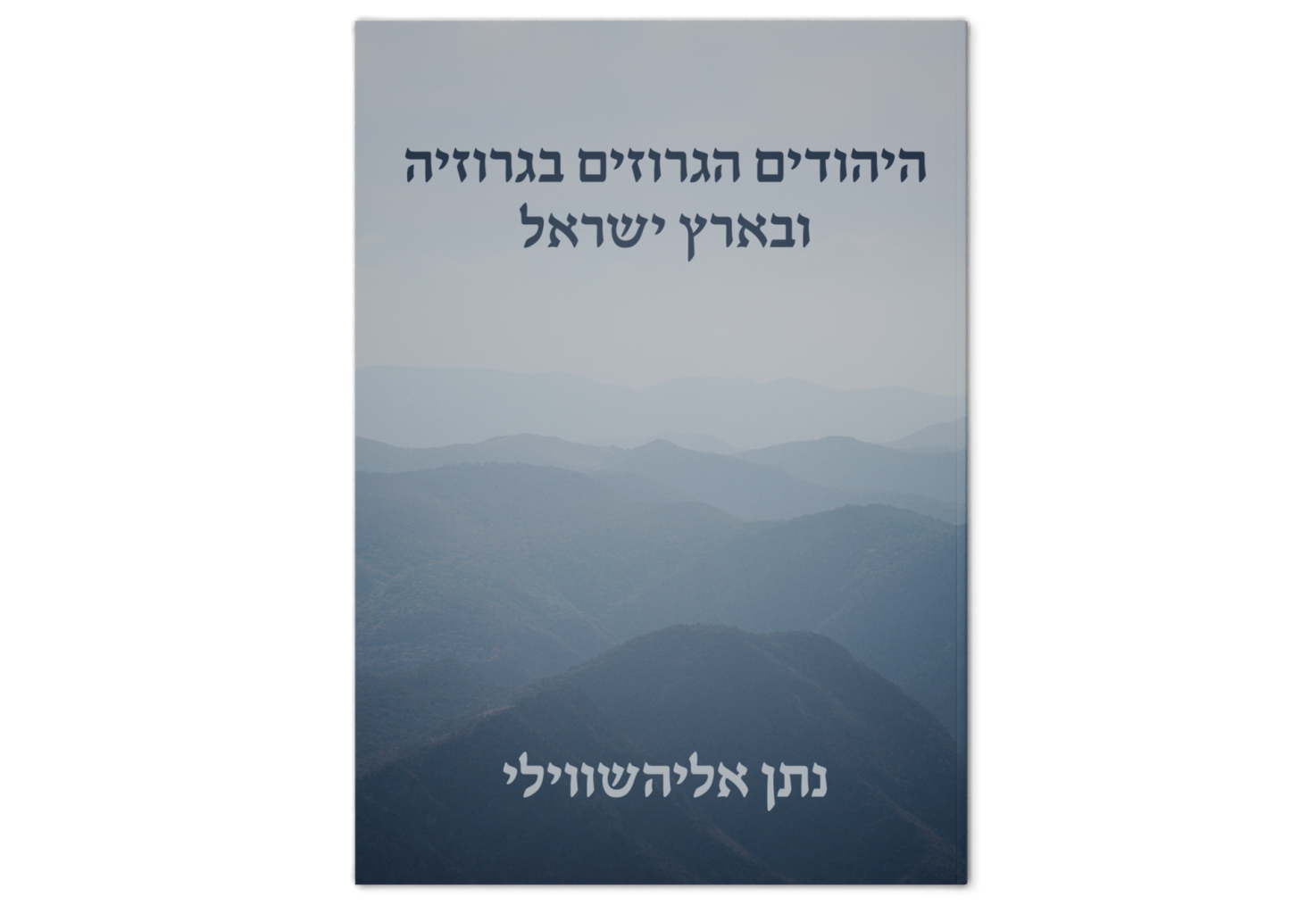
The Georgian Jews in Georgia and the Land of Israel
Nathan Eliashvili
מחיר קודם: $33
$23
Availability: In Stock
History is shaped by human stories—dreams, ideas, and actions, whether chosen or imposed. In this book, Nathan Eliashvili provides a rare and reliable account of Georgian Jewish history in the early twentieth century. Combining historical research with personal testimony, it presents an honest, unsentimental portrayal of a Jewish community navigating political upheaval, moral dilemmas, and questions of identity. Free from ideological bias and folkloric distortion, the book serves as a trustworthy guide to understanding Georgian Jewry and the people who shaped its history.
This book is intended for anyone interested in history, for guides, and for all who value humanity—those who witness injustice and corruption around them yet do not lose their integrity, remaining honest, wise, and principled.
— Itay Bahur
About the Book
Very few serious works have been written about the Jews of the Caucasus, and even fewer meet rigorous scholarly standards of accuracy and integrity. This book stands out for its clarity, credibility, and moral seriousness.
Its distinctive strength lies in combining the collective history of Georgian Jewry with the personal story of the author—a Zionist activist, educator, and eyewitness to many of the events he describes. This dual perspective provides both analytical depth and human insight into social, political, and cultural developments.
The revised edition is based on the original 1975 publication and has been carefully edited, corrected, and annotated. It features clearer transliteration, partial vocalization of complex names and terms, a detailed index, and extensive contextual notes. Much of the additional historical and biographical information was provided with the assistance of Professor Mamuka Butskhrikidze.
About the Author
Nathan Eliashvili (1893–1929) was born in Tskhinvali, Georgia. He studied at the Radin Yeshiva and the Teachers’ Seminary in Vilna. Returning to Georgia, he became a founding figure of the local Zionist movement, co-founded a Hebrew Zionist school in Tbilisi, and helped establish Hama Ebralisa, the first Zionist journal published in the Georgian language. After immigrating to Palestine in 1925, he worked as an agricultural laborer while writing this book. Eliashvili died in Tel Aviv at the age of 36. The manuscript was discovered among his papers after his death.
Frequently Asked Questions
What is this book about?
It explores the history of Georgian Jews in the early twentieth century through both historical research and firsthand experience.
Why is this book considered reliable?
It avoids ideological bias and draws on lived knowledge, primary documentation, and critical evaluation of sources.
Is it memoir or academic history?
It is a rare combination of both: a rigorous historical study enriched by the author’s personal involvement.
Who should read this book?
Historians, educators, tour guides, and readers interested in human-centered history.
Why is the new edition important?
It provides context for modern readers and adds essential explanatory material.
Key Topics
The history of Georgian Jewry in the early 20th century within the broader context of Caucasian Jewish communities
A unique combination of historical scholarship and personal testimony by the author as a Zionist activist and eyewitness
A vivid portrayal of a Jewish community navigating political, social, and identity-related upheavals
A balanced and reliable historical approach, free from ideological bias and folkloric distortion
A revised scholarly edition of the original 1975 publication, including editorial improvements, annotations, and historical commentary
Enrichment of the text with a detailed index and expanded historical and biographical notes