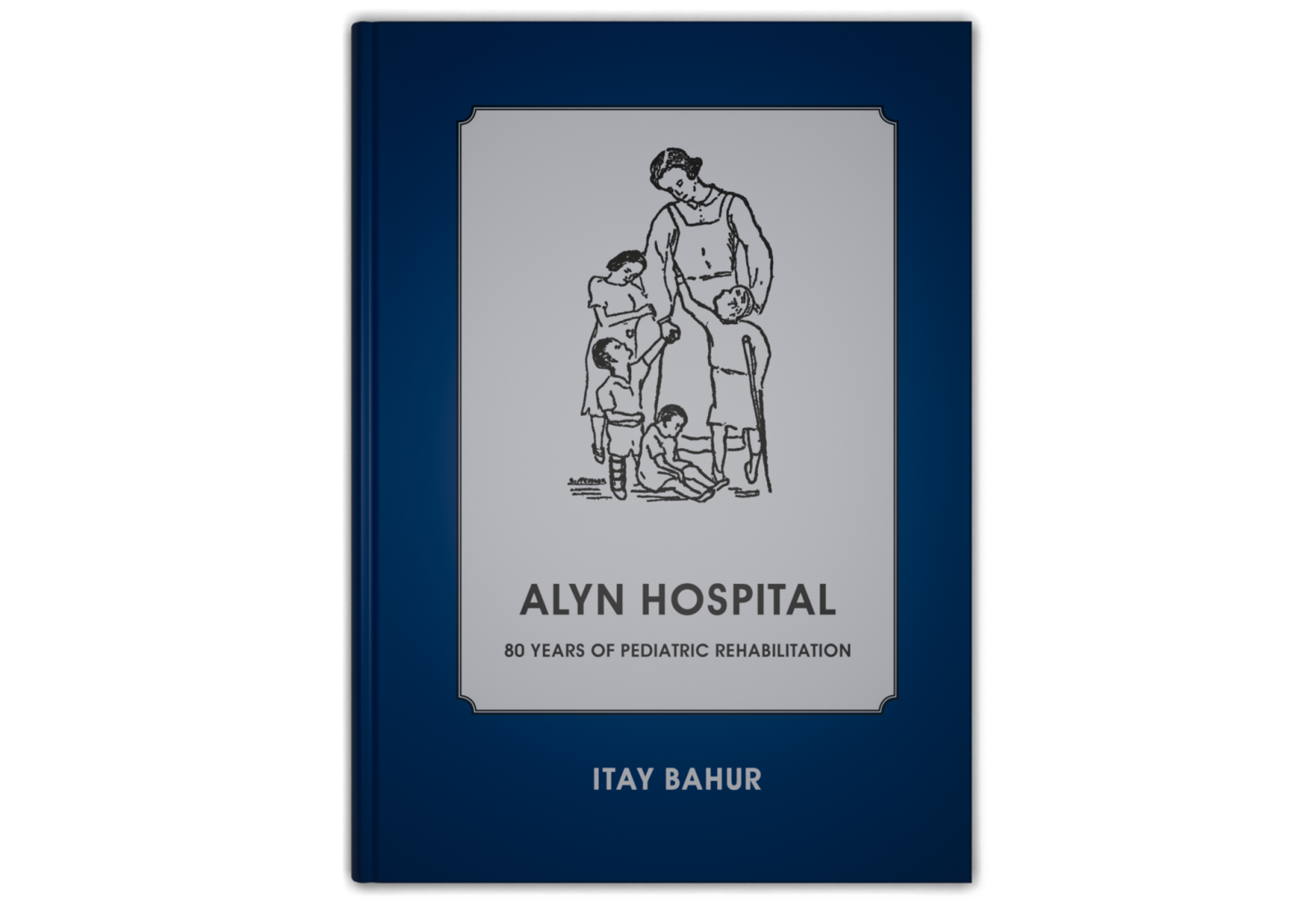
Alyn Hospital: 80 Years of Pediatric Rehabilitation
Itay Bahur
מחיר קודם: $51
$36
Availability: In Stock
This book chronicles the history of ALYN Hospital, a pioneering pediatric rehabilitation center in Jerusalem, from its beginnings as a clinic in 1929 to its formal founding as a hospital in 1934, and its growth to the present day. Drawing on meticulous archival research and original interviews, it tells the story of Dr. Henry Keller, who believed that rehabilitation should address the whole child—medical, educational, and social needs.
Through the story of this single institution, the book sheds light on key moments in Israel’s medical and social history, including wars, epidemics, and the evolution of pediatric rehabilitation. Featuring 39 rare, carefully restored photographs, many appearing for the first time, the book provides a vivid visual record that brings the historical narrative to life.
The audience for this book goes beyond ALYN’s supporters, staff, or former patients. It provides a lens on our current healthcare landscape—the decline of compassion and vision, and the rise of financially driven decision-making over patient-centered care. Had today’s planners been asked to fund services for children with severe disabilities, they might have considered it economically unfeasible. This book delivers a different message—and that is its true significance.
— Prof. Yoel Donchin, Would a Hospital Like ALYN Be Founded Today?, DoctorsOnly, May 26th, 2014
About the Book
Founded as an orthopedic clinic in Jerusalem in 1929 and formally established as a hospital in 1934, ALYN Hospital became Israel’s pioneering center for pediatric rehabilitation. The hospital was created by Dr. Henry Keller, a Jewish-American orthopedic surgeon who believed that preventing lifelong disability required a holistic approach, combining medical care with education, social integration, and community support.
Keller split his life between New York and Jerusalem, using his U.S. earnings to fund free treatment, medical equipment, medications, education, and vocational training for underprivileged children of all faiths. At a time when such practices were uncommon, ALYN treated Jewish, Muslim, and Christian children alike.
The history of ALYN mirrors key chapters in Israel’s own story. During the 1948 War of Independence and again after the 1973 war, wounded soldiers were treated alongside disabled children. In the 1950s, the hospital cared for roughly 75 percent of the children affected by Israel’s polio epidemic.
Drawing on extensive archival research and original interviews, this book explores ALYN’s ongoing challenges, its evolving relationship with Israel’s healthcare system, and the development of pediatric rehabilitation medicine. The volume includes 39 rare, carefully restored photographs, many appearing here for the first time, and was published to commemorate ALYN Hospital’s 80th anniversary.
About the Author
Itay Bahur is an author and publisher specializing in documentary and creative nonfiction, historical writing, and narrative-based research. His work bridges scholarly research and literary storytelling, with a strong emphasis on human experience and visual documentation. His books include Max (1996), Zero Percent (1998), A Cracked Bell (2005), Autumn in Tbilisi (with Hedva Rokach, 2013), and Schneider’s Children (2016).
Frequently Asked Questions
When was ALYN founded?
The orthopedic clinic opened in Jerusalem in 1929, and ALYN Hospital was officially established in 1934.
What sources is the book based on?
Extensive archival research, original interviews, historical documents, and 39 rare photographs, many published here for the first time.
Who founded ALYN and what guided his approach?
Dr. Henry Keller, a Jewish-American orthopedic surgeon, who believed pediatric rehabilitation should be holistic—integrating medical care, education, and community support.
Why is ALYN historically significant?
It played a vital role in treating children with disabilities, polio, and war-related injuries, shaping the development of pediatric rehabilitation in Israel.
Who should read this book?
Medical professionals, historians, educators, policymakers, and anyone interested in healthcare ethics, social responsibility, and compassionate care.
What kinds of documents and photographs are included?
The book features 39 rare documents and photographs, including certificates, diaries, and images, offering a vivid visual record of ALYN’s history and the children it served.
Key Topics
Establishment of Jerusalem’s first pediatric orthopedic clinic (1929) and hospital (1934)
Dr. Henry Keller and his vision of holistic rehabilitation
Founding and growth of the ALYN Association
Care for children with disabilities from diverse religious and ethnic communities
Israel’s polio epidemic and ALYN’s response
Treatment of casualties from Israel’s wars
Advances in pediatric rehabilitation medicine
ALYN’s role within the broader healthcare system and relationship with the state
Compassion, vision, and the ethics of medical care