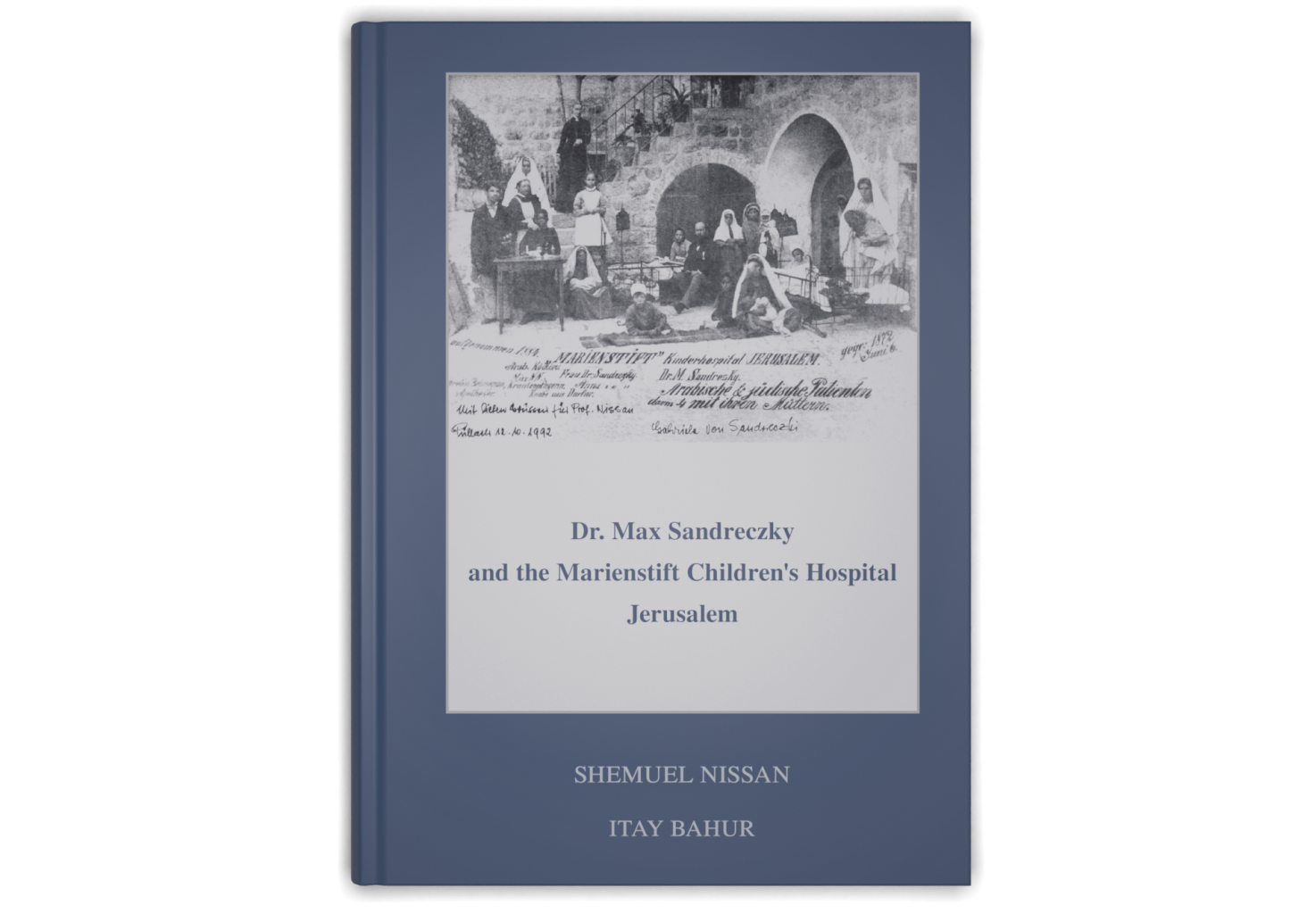
Dr. Max Sandreczky and the Marienstift Children’s Hospital, Jerusalem
Shemuel Nissan and Itay Bahur
מחיר קודם: $66
$46
Availability: In Stock
This book documents the forgotten story of Jerusalem’s first children’s hospital, founded in the 19th century by Dr. Max Sandreczki. Drawing on historical research, rare primary documents, and exceptional visual material, it features dozens of restored historical photographs and engravings by renowned 19th-century artists. Through the life of Dr. Sandreczki, his family, and the preserved hospital building on Street of the Prophets (HaNevi’im St.), the book reveals a unique intersection of humanitarian medicine, visual art, and Jerusalem’s cultural history.
Sandreczky’s life story reveals the political and religious intrigues, including plots, alliances, and maneuverings, that shaped Jerusalem’s complex, cosmopolitan society.
— Tom Segev, Haaretz, April 1st, 2011
About the Book
In the nineteenth century, pediatrics had not yet emerged as an independent medical discipline. Dr. Max Sandreczky, a German physician of Polish origin born in Greece, founded Jerusalem’s first children’s hospital, Marienstift.
For 27 years, the hospital treated children from across the Middle East without regard to religion, nationality, or missionary affiliation, an exceptional approach in Ottoman Jerusalem. His wife, Johanna, managed the household and prepared meals for patients, while three of their daughters served as nurses.
After Dr. Sandreczky’s suicide in 1899, the hospital closed. The historic building at 29 Street of the Prophets was designated for preservation in 1996 and later housed the humanitarian organization Shevet Achim, which brings children from many countries, including enemy states, to Israel for life-saving heart surgery.
Beyond its historical significance, the book is visually and artistically remarkable. It features dozens of restored historical photographs and engravings by renowned 19th-century artists. This visual documentation enriches the historical narrative and makes the book both a scholarly resource and an artistic reference.
About the Authors
Prof. Shemuel Nissan is a founder of pediatric surgery in Israel and former Head of General and Pediatric Surgery at Hadassah Mount Scopus Hospital. He devoted more than twenty years to researching Dr. Max Sandreczky and led public efforts to preserve the historic Marienstift hospital building.
Itay Bahur is an author and publisher specializing in documentary and creative nonfiction, historical writing, and narrative-based research. His work bridges scholarly research and literary storytelling, with a strong emphasis on human experience and visual documentation. His books include Max (1996), Zero Percent (1998), A Cracked Bell (2005), Autumn in Tbilisi (with Hedva Rokach, 2013), ALYN: A Pediatric Rehabilitation Hospital (2014), and Schneider’s Children (2016).
Frequently Asked Questions
What is this book about?
The history of Jerusalem’s first children’s hospital and its founder, Dr. Max Sandreczky.
Is it academic research or narrative history?
Both. It combines rigorous research with an accessible, human-centered narrative.
What makes the book artistically unique?
It features dozens of restored historical photographs and engravings by 19th-century artists.
Why is Marienstift historically significant?
It provided pediatric care without discrimination in the 19th century.
Who should read this book?
Historians, medical professionals, art historians, and general readers interested in medicine, culture, and Jerusalem’s history. It provided non-discriminatory pediatric care in the 19th century.
Who should read this book?
Historians, medical professionals, art historians, and general readers.
Key Topics
Origins of pediatric medicine
Hospitals in Ottoman-era Jerusalem
History of humanitarian healthcare
Biography of Dr. Max Sandreczky.
Preservation of historic buildings
HaNevi’im Street, Jerusalem
Visual history of Jerusalem
Restored historical photographs
19th-century artistic engravings
Medicine, art, and cultural memory